| Filter Types |
Description |
|
| |
Carbon Filters Only |
|
| Type A |
For organic vapors such as ketones, ethers, alcohols, xylenes… Eventually it can be used for inorganic acids, but only if used in small quantities because this activated carbon is not impregnated and the excess of acid vapors could saturate it quickly. |
Buy Online! |
| Type BE |
For inorganic acid vapors as H2SO4, HCl, HNO3, and volatile sulfur compounds such as H2S, SO3, … It can be used with organic vapors because the activated carbon incorporates impregnation of metal compounds and neutralizing salts. It is also suitable to filter organic and inorganic compounds when they are in similar proportions. |
Buy Online! |
| Type F |
For formaldehyde vapors and derivatives; also good for other organic compounds. Carbon impregnated with Cu leads, so that it should never be used with inorganic acid vapors. |
Buy Online! |
| Type K |
For NH3 vapors and amines; also good for other organic compounds. Carbon with metal salt complexes impregnation. |
Buy Online! |
| Type ABEK |
Mixed type to be used when the ratios between organic, inorganic and NH3/amines are similar. |
Buy Online! |
| |
Carbon Filters AND HEPA Filters |
|
| Type AD |
For organic vapors such as ketones, ethers, alcohols, xylenes… Eventually it can be used for inorganic acids, but only if used in small quantities because this activated carbon is not impregnated and the excess of acid vapors could saturate it quickly.
Plus, HEPA H-14 filter (High Efficiency Particulate Air, according to EN-1822: 1998) for filtering dust and smoke particles.
|
Buy Online!
|
| Type BED |
For inorganic acid vapors as H2SO4, HCl, HNO3, and volatile sulfur compounds such as H2S, SO3, … It can be used with organic vapors because the activated carbon incorporates impregnation of metal compounds and neutralizing salts. It is also suitable to filter organic and inorganic compounds when they are in similar proportions.
Plus, HEPA H-14 filter (High Efficiency Particulate Air, according to EN-1822: 1998) for filtering dust and smoke particles.
|
Buy Online!
|
| Type FD |
For formaldehyde vapors and derivatives; also good for other organic compounds. Carbon impregnated with Cu leads, so that it should never be used with inorganic acid vapors.
Plus, HEPA H-14 filter (High Efficiency Particulate Air, according to EN-1822: 1998) for filtering dust and smoke particles.
|
Buy Online!
|
| Type KD |
For NH3 vapors and amines; also good for other organic compounds. Carbon with metal salt complexes impregnation.
Plus, HEPA H-14 filter (High Efficiency Particulate Air, according to EN-1822: 1998) for filtering dust and smoke particles.
|
Buy Online!
|
| Type ABEKD |
Mixed type to be used when the ratios between organic, inorganic and NH3/amines are similar.
Plus, HEPA H-14 filter (High Efficiency Particulate Air, according to EN-1822: 1998) for filtering dust and smoke particles.
|
Buy Online!
|
| |
HEPA Filters |
|
| Type D |
HEPA H-14 filter (High Efficiency Particulate Air, according to EN-1822: 1998) for filtering dust and smoke particles. |
Buy Online! |




.webp?width=250&height=64&name=Picture1%20(2).webp "Picture1 (2)")

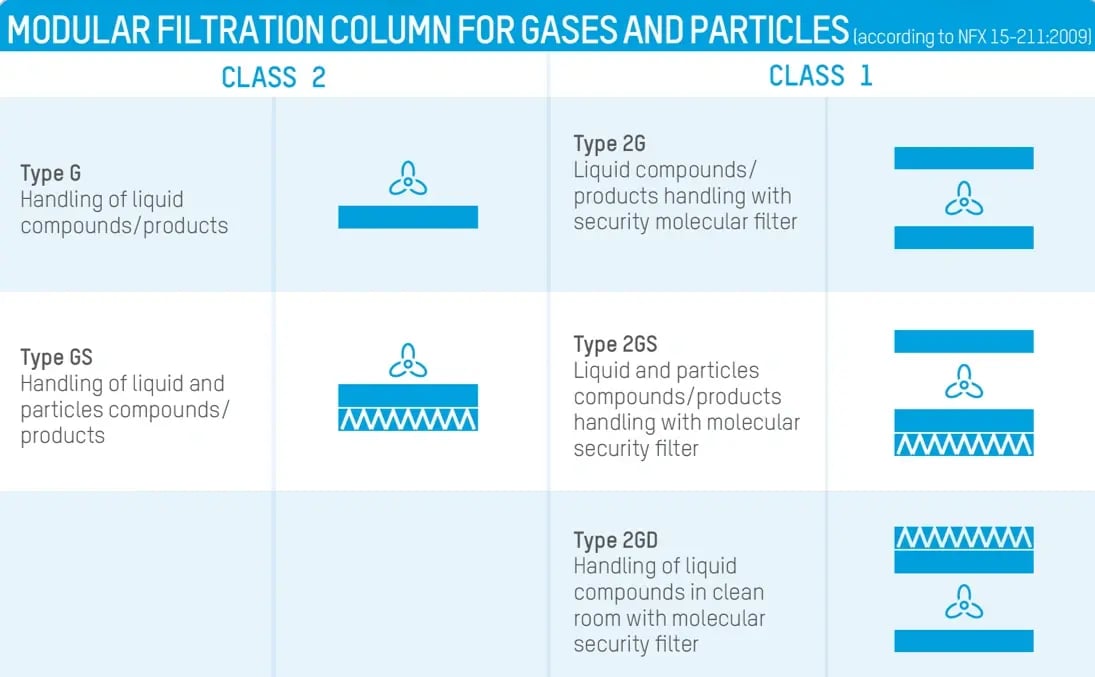
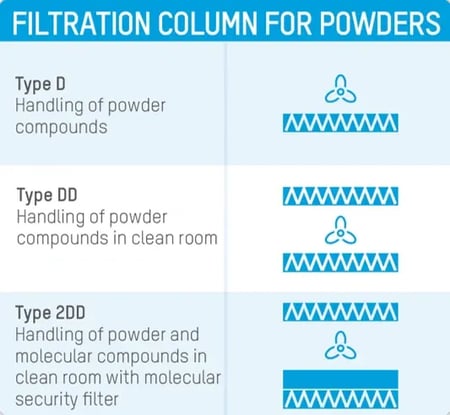
 Fan
Fan  Molecular Filter
  HEPA-14 Filter