
Vented Storage Cupboard
Cruma 2010
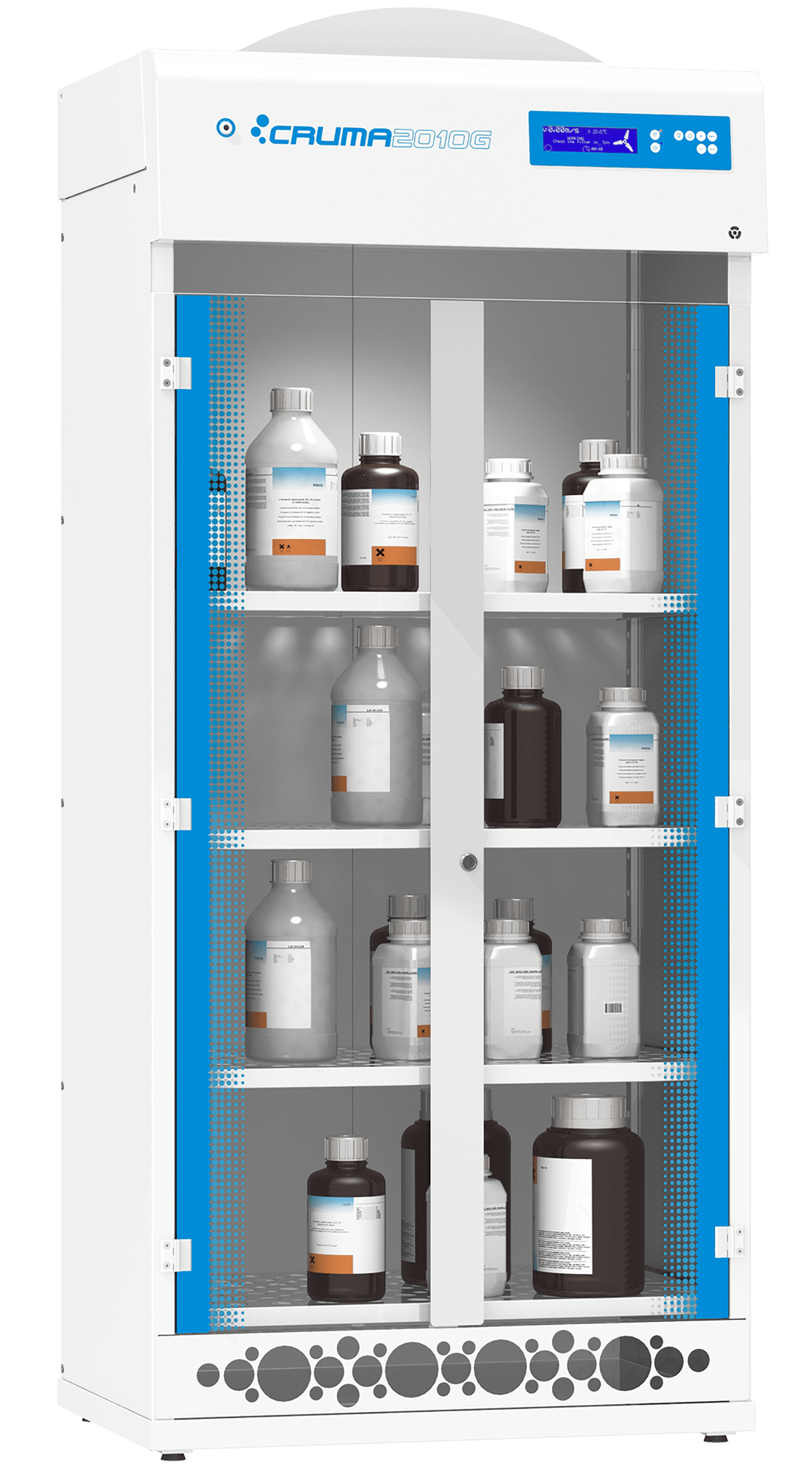
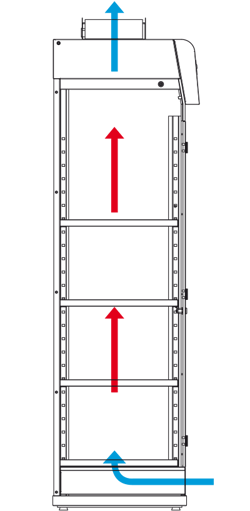
Thanks to the Cruma 2010 vented storage cupboard is it possible to store liquid reagents as this eliminates inflammable, corrosive and toxic fumes through chemical adsorption in a specific activated carbon filter without having to be connected to the outside.

Personnel Safety and Environmental Protection
In addition to facilitating storage in the laboratory, chemical vapors that may escape from the bottles are not released to the outside but are retained within an active carbon filter or zeolite.


Yes, they all fit and are standard.
More information on the new LCD display
New size 127x34mm display
Air speed continuously monitored
Type of filter installed, working hours, expiration
date and next revision date
Countdown timer
Clock and calendar
New features and components
Fault LED
Control of air flow through Microprocessor
Filters with electronic chip
LED illumination
New alarms and scheduled warnings
Next validation warning
Few hours of filter life warning
Countdown timer warning
Expired filter alarm (by hours)
Expired filter alarm (by date)
Equipment without filter alarm

But we’re sure you’ll find more.
Storage of chemicals under the criteria of incompatibilities. Filters available:
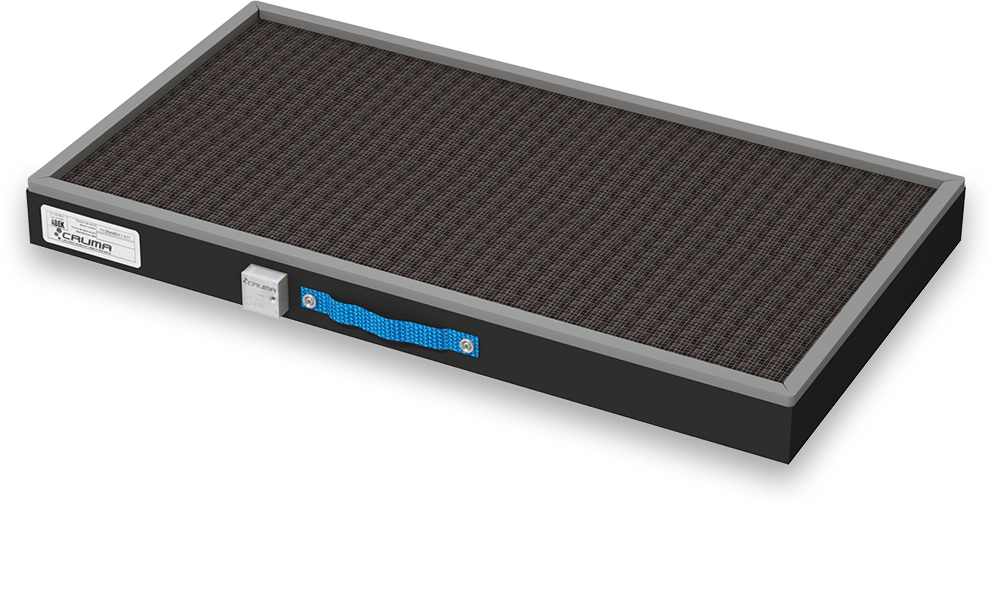
Type A: adsorption of vapours and organic solvents (ketones, ethers, alcohols and cyclic, etc.). Activated carbon without impregnation.
Type BE: inorganic gases such as Cl2, HCl, HNO3, etc. and volatile sulphur compounds (H2S, H2SO4 and SOx, etc.). Activated carbon impregnated with metal compounds and neutralising salts.
Type F: specific to formaldehyde and derivatives. Impregnated with Cu.
The Cruma 2010 vented storage cupboard are designed to ensure that no handling operations are necessary once these have been received: all you have to do is take them out of their fantastic packaging, place them in the desired spot, plug them into the mains and get to work. As simple as plug in and play.

Our vented storage cupboard uses the new filtration system, developed and patented by Cruma (Invention Patent), which protects the operator by retaining the contaminating gas and fumes generated inside from stored botles, constantly renewing the air inside the laboratory and avoiding leaks that may contaminate the environment.
All you need serially
| Model | 2010 |
| Internal Sizes (Width/Depth/High) | 732x460x1388 |
| External Sizes (Width/Depth/High) | 800x548x1845 |
| Filtering columns | 1 |
| Filter number | 1 a 2 |
| Fans | 1 |
| Average volume of treated air/hour | 160 m3/h |
| Average face velocity | 0.50 m/s |
| Internal volume of the cabinet | 0.567m3 |
| Renewals inside the cabinet/min. | 4.6 ren./s |
| Total electrical power consumption | 91 W |
| Voltage-Frequency | 110-220 V / 50-60 Hz |
| LED light intensity | 800Lux / LED 16 W |
| Shelves | 4 |
| Noise level | 48 dB |
| Weight | 150 Kg |
| Packaging volume | 1.1 m3 |
| Equipment | Description |
|---|---|
| Electronic circuit with large format LCD screen | Security levels: level 1 for users and level 2 for maintenance users |
| Anemometer device | Electronic sensor monitoring continuously air face velocity |
| Electronic control device for filters replacement | The filters incorporate a microchip with mini-USB connection that identifies the type of filter installed, the expiry date and the serial no. |
| Illumination | 96 LED Tube high light intensity and low power consumption – 16 Watts / 700 Lux |
| Sampling system to analyse the filtered air at the exhaust | To detect the level of filter saturation |
| 60 hours alarm | Countdown timer according to French NF X 15-211:2009 |
| Electronic chronometer with audible alarm | To program the work inside the fume hood |
| Clock and calendar | Display of date and time |
| G4 Prefilter | G4 class pre-filtering blanket of synthetic biofibres (according to EN-779) for the retention of atmospheric dust |
| Chemical Listing | Guide of retained products by type of filter |
| Warranty | 10 years |
| Equipment | Description |
|---|---|
| Voltage / Frequency | 125 V / 50 Hz |
| Filter test kit | Dräger pump with reactive colorimetric tubes (pack 10u) |

| Filter type | Description |
|---|---|
| Type A | For organic vapors such as ketones, ethers, alcohols, xylenes… Eventually it can be used for inorganic acids, but only if used in small quantities because this activated carbon is not impregnated and the excess of acid vapors could saturate it quickly. |
| Type BE | For inorganic acid vapors as H2SO4, HCl, HNO3, and volatile sulfur compounds such as H2S, SO3, … It can be used with organic vapors because the activated carbon incorporates impregnation of metal compounds and neutralizing salts. It is also suitable to filter organic and inorganic compounds when they are in similar proportions. |
| Type F | For formaldehyde vapors and derivatives; also good for other organic compounds. Carbon impregnated with Cu leads, so that it should never be used with inorganic acid vapors. |
Incompatibilities in the Storage of Chemical Products Separate or Joint Storage
| Explos. | Combu. | Inflam. | Toxic | Corrosive | Harmful | |
|---|---|---|---|---|---|---|
| Explosives | YES | NO | NO | NO | NO | NO |
| Comburent | NO | YES | NO | NO | NO | (2) |
| Inflammable | NO | NO | YES | NO | (1) | YES |
| Toxic | NO | NO | (1) | YES | YES | YES |
| Corrosive | NO | NO | (1) | YES | YES | YES |
| Harmful | NO | (2) | YES | YES | YES | YES |
(1) They may be stored together if corrosive products are not packed in fragile containers.
(2) They may be stored together if certain measures of prevention are taken. These are general criteria. For any other type of classification of danger levels, the possible storage incompatibilities must be more fully examined.
- Products that react with water must not be stored in the same area as other inflammable or combustible liquids.
- Inflammable or combustible liquids must not be stored in conventional refrigerators.
for gases and particles (according to NFX 15-211:2009)
| CLASS 2 | |
|---|---|
| Type G Handling of liquid compounds/products |
|
| Type GS Handling of liquid and particles compounds/products |
|
Fan -
Molecular Filter -
HEPA-H14 Filter
Incompatibilities
Separation methods. Segregation criteria.
| Number | Chemical Group | Do Not Store with Chemical Number Groups with the indicate numbers |
|---|---|---|
| 1 | Inorganic acids | 2-8, 10, 11, 13, 14, 16-19, 21, 22, 23 |
| 2 | Organic acids | 1, 3, 4, 7, 14, 16, 17-19, 22 |
| 3 | Caustic products | 1, 2, 6, 7, 8, 13-18, 20, 22, 23 |
| 4 | Amines and alkanolamines | 1, 2, 5, 7, 8, 13-18, 23 |
| 5 | Halogenated compounds | 1, 3, 4, 11, 14, 17 |
| 6 | Alcohols, glycols, glycol-ethers | 1, 7, 14, 16, 20, 23 |
| 7 | Aldehydes | 1-4, 6, 8, 15-17, 19, 20, 23 |
| 8 | Ketones | 1, 3, 4, 7, 19, 20 |
| 9 | Saturated hydrocarbons | 20 |
| 10 | Aromatic hydrocarbons | 1, 20 |
| 11 | Olefins | 1, 5, 10 |
| 12 | Petroleum oils | 20 |
| 13 | Esters | 1, 3, 4, 19, 20 |
| 14 | Monomers, polymerisable esters | 1-6, 15, 16, 19-21, 23 |
| 15 | Phenols | 3, 4, 7, 14, 16, 19, 20 |
| 16 | Alkylene oxides | 1-4, 6, 7, 14, 15, 17-19, 23 |
| 17 | Cyanohydrins | 1-5, 7, 16, 19, 23 |
| 18 | Nitryls | 1-4, 16, 23 |
| 19 | Ammonia | 1-2, 7, 8, 13-17, 20, 23 |
| 20 | Halogens | 3, 6-15, 19, 21, 22 |
| 21 | Ethers | 1, 14, 20 |
| 22 | Elemental phosphorous | 1-3, 20 |
| 23 | Acid anhydrides | 1, 3, 4, 6, 7, 14, 16-19 |
Research
Laboratories
Pharmaceutical
Medical

Cosmetics
Batteries
Do you need help?
Our customer representative helps you to understand what we offer for your business goals.
Phone
+61 3 9193 1137
sales@gloveboxaustralia.com.au


.webp?width=250&height=64&name=Picture1%20(2).webp)